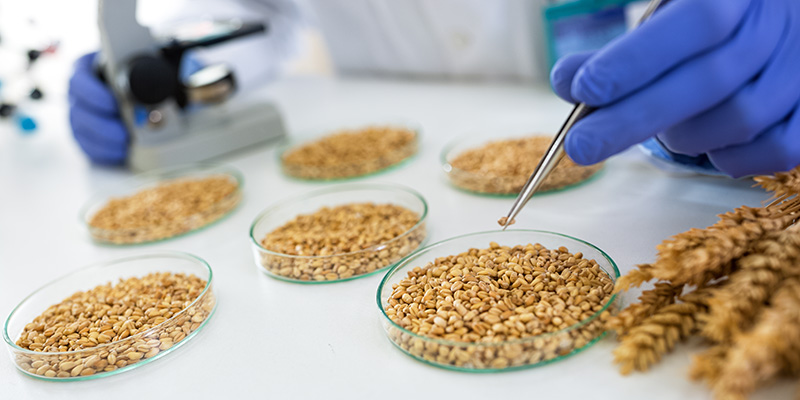
Deoxynivalenol (DON), also known as vomitoxin, remains one of the most prevalent mycotoxins worldwide. It is produced by fungi of the Fusarium genus and is most commonly found in cereal crops such as wheat, maize (corn), and barley. In recent years, DON contamination has become an increasingly important issue due to rising contamination levels, stricter regulatory requirements, and the need to monitor not only the toxin itself but also its modified forms.
Increasing Prevalence of DON in Grain Products
According to international studies, DON remains one of the most frequently detected mycotoxins in food and feed raw materials. Its presence is regularly identified in a significant proportion of grain samples, while cases of co-contamination with multiple mycotoxins are becoming increasingly common.
For food manufacturers, feed producers, and agricultural enterprises, this means that regular monitoring of raw material quality is essential at every stage of the production chain.
Impact of Climate Change on Contamination Risks
One of the main reasons for the increasing incidence of DON contamination is changing climatic conditions. Higher humidity, uneven rainfall distribution, and temperature fluctuations create favorable conditions for the growth of Fusarium fungi and the accumulation of mycotoxins in grain.
As a result, laboratories are increasingly faced with the need to analyze large numbers of samples and detect even low concentrations of toxins.
New Requirements for Laboratory Control
Modern regulatory approaches are focused not only on monitoring DON itself but also on assessing the combined impact of its modified forms:
3-Ac DON
15-Ac DON
DON-3G
These compounds may be present simultaneously in products and can affect the overall toxicological assessment of a sample. Therefore, laboratories increasingly require solutions that enable the determination of multiple analytes within a single analysis.
Key Trends in DON Testing
Today, the laboratory diagnostics market demonstrates several key trends:
Increasing numbers of DON analyses;
The need for simultaneous determination of DON and its metabolites;
A shift toward multi-analyte analytical methods;
Higher requirements for accuracy and reproducibility of results;
Optimization of laboratory workflows to reduce sample preparation time.
A Modern Solution for the Determination of DON and Its Metabolites
To ensure effective monitoring of DON and its modified forms, laboratories are increasingly choosing specialized sample preparation methods compatible with LC-MS/MS analysis.
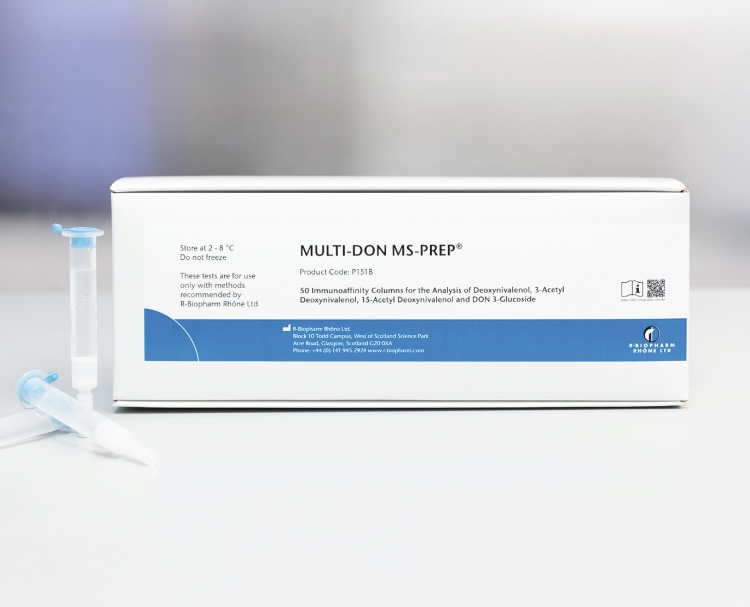
One such solution is MULTI-DON MS-PREP®, developed for the simultaneous clean-up and determination of DON, 3-Ac DON, 15-Ac DON, and DON-3G within a single analytical workflow.
Key Advantages of This Approach
✔ Simultaneous determination of DON and its key metabolites using a single column.
✔ Reduced costs by eliminating the need for multiple clean-up steps.
✔ Simplified workflow: one extraction, one clean-up procedure, and analysis of multiple analytes.
✔ Cleaner extracts, improving the reliability and sensitivity of LC-MS/MS analysis.
Conclusion
The increasing prevalence of DON, the impact of climate change, and stricter regulatory requirements make comprehensive mycotoxin control more important than ever. For modern laboratories, speed, accuracy, and the ability to simultaneously determine DON and its modified forms are becoming key success factors.
The use of advanced sample preparation solutions enables laboratories to optimize workflows, improve analytical performance, and meet the evolving demands of the laboratory diagnostics market.