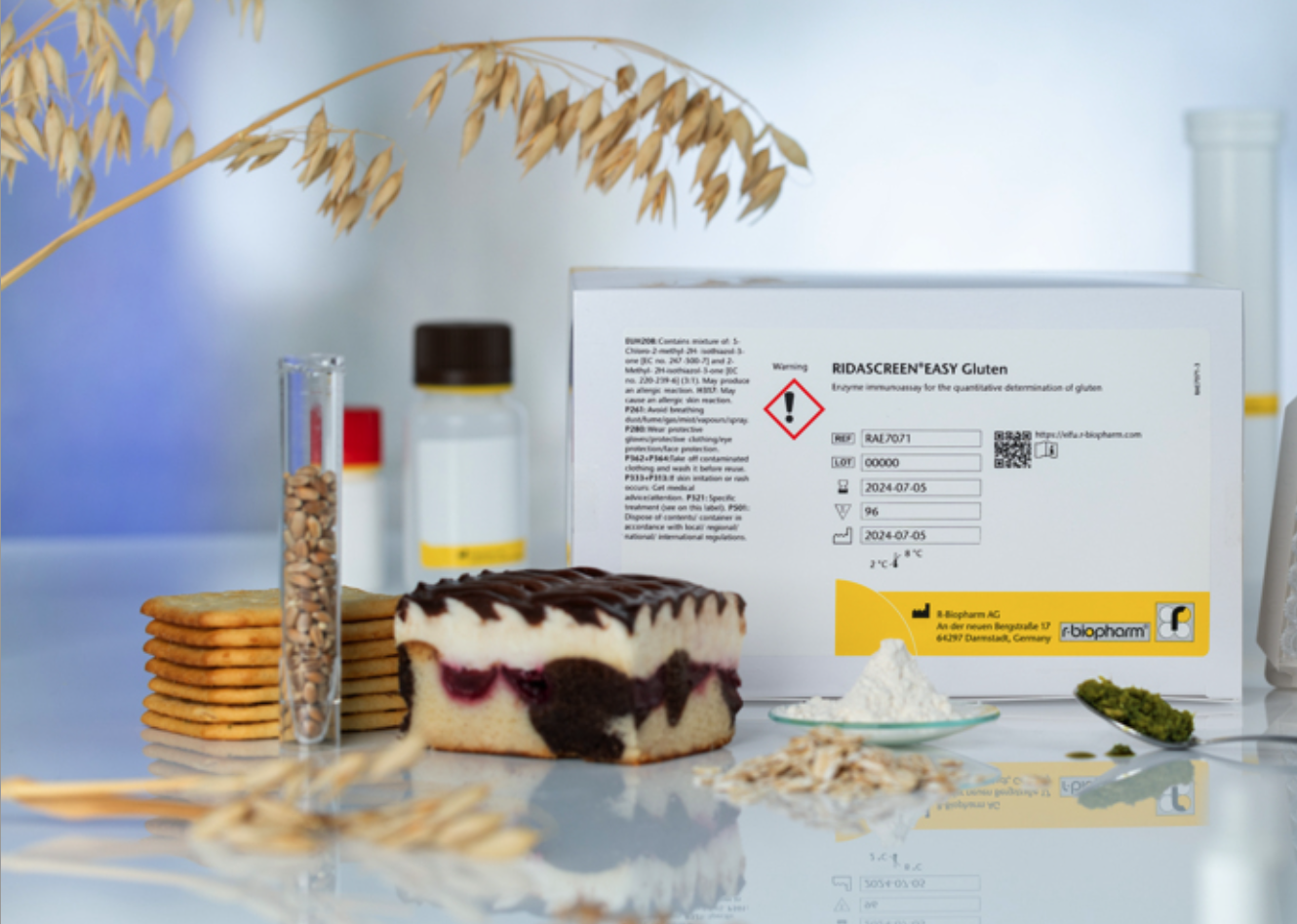
Food products such as peanuts, eggs, almonds, and milk, even in small concentrations, can trigger allergic reactions in individuals with allergies. Such reactions can be dangerous. Ready-to-eat products and semi-finished goods can pose a significant risk for allergic individuals due to their complex compositions, especially when allergens are not listed on the label.
Currently, manufacturers are not interested in labeling low concentrations of “ingredient in ingredient.” For example, pasta may contain egg white, but consumers may not know it is present. The new recommendation 2003/89/EC (which amends the 2000/13/EC directive) includes an article about the 25% threshold established 20 years ago. The new labeling recommendation requires that complex ingredients be listed on the label if their proportion in the final product exceeds 2%. Additionally, major allergens such as gluten/gliadin, eggs, peanuts, hazelnuts, almonds, soy, sulfites, milk, and lactose must be indicated on the label. Until now, there have been no limit values for allergens, except for sulfites, which have a limit of 10 mg/kg. Ingredient labeling, mandatory for all food manufacturers since November 25, 2005, ensures transparency and consumer trust.
As a result of this labeling recommendation, all food manufacturers now require analytical methods to detect and quantify all allergens. Testing of the final product ensures the absence of cross-contamination during production or storage. For instance, nut-free chocolate may still contain trace amounts of nuts if both types of chocolate are produced on the same line.
Immunological analytical methods, such as ELISA (Enzyme-Linked Immunosorbent Assay), are highly suitable for allergen detection. PCR analysis is also very popular, especially for DNA detection, along with enzymatic methods. R-Biopharm offers all methods suitable for allergen detection.
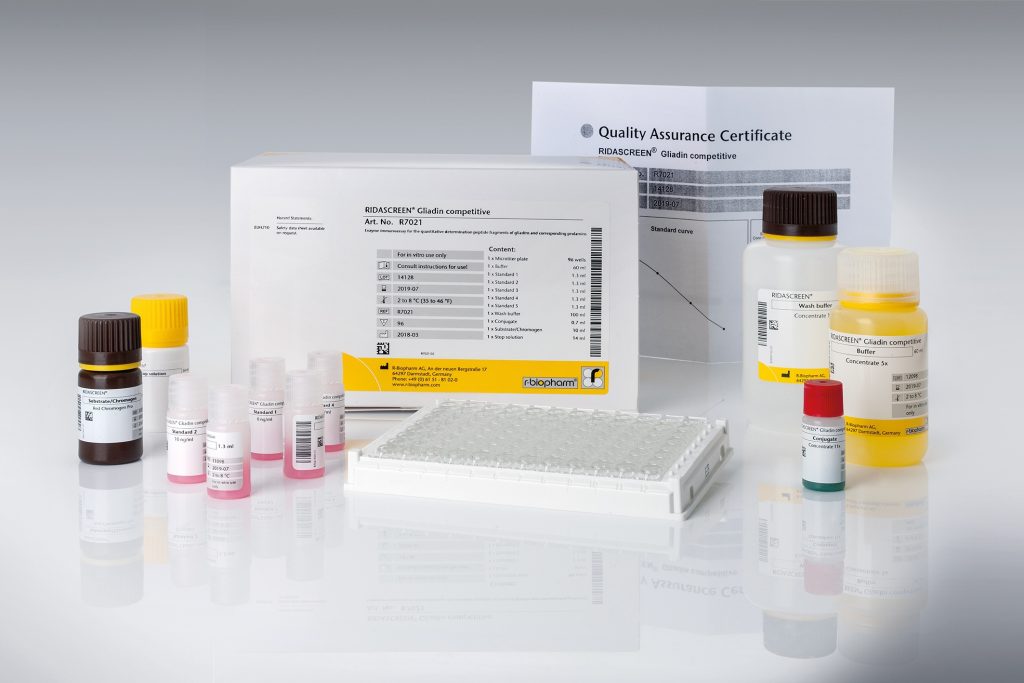
Most RIDASCREEN ELISA test kits are sandwich-type immunoassays. They are based on an antigen-antibody reaction. The microtiter plate is sensitized with specific antibodies to the target antigen. Additionally, the standard or sample contains an antigen-antibody complex. Another antibody linked to peroxidase binds to the antigen-antibody complex on the microtiter plate. Together, these form an antibody-antigen-antibody (sandwich) complex.
The color reaction necessary for evaluation occurs upon the addition of substrate and chromogen solution. The enzyme converts the colorless chromogen into a blue end product. After adding the stop reagent, the test results are measured on an ELISA photometer at a wavelength of 450 nm. The concentration of the sample is determined through the measured values against a standard curve.
RIDASCREEN tests for allergen analysis are easy to use and have received international approval from AOAC and PWG.
The characteristic partnership and teamwork policy of R-Biopharm is precisely the approach valued by both its clients and research partners. The company’s key mission is to be a reliable partner for clients, providing knowledgeable advice across every sector it serves.
At R-Biopharm, the focus is on the future, with promising prospects in the field of clinical diagnostics and food and feed analysis. The main challenge is to promote the development of new and versatile rapid tests. These will reduce the time required to obtain results across a wide range of analytical procedures.
For further information, please contact our FOODCARE specialists – contact information.